01
Website prices and stock do not match accounting
A customer orders an item that is no longer available.


// niche = integration.1c-bas
1C or BAS integration automatically synchronises products, prices, stock and orders between the website and accounting system. We set up two-way exchange with custom code.
A real Safari case We hand over the code
§ 02 · Problem
A customer orders an item that is no longer available.
It takes time and leads to errors.
Some orders get lost along the way.
Texts, photos and SEO changes are replaced during the exchange.
Each size may be a separate product, while the category tree is chaotic.
§ 03 · Solution
These are components that can be included in the integration. We set up the sync for your system, and you choose what you need.
§ 04 · Case
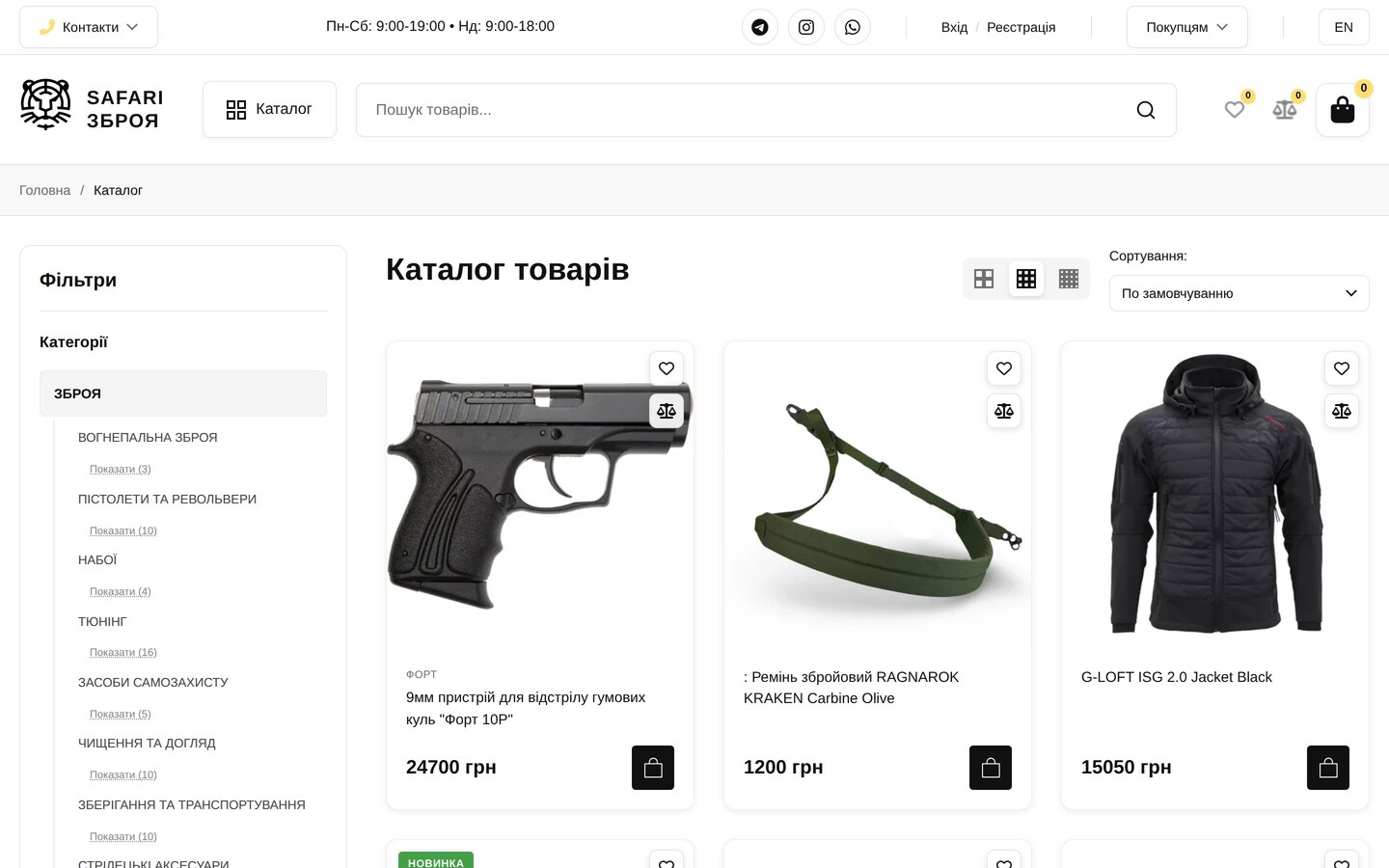
An online store built with Django and 1C synchronization: about 3000 products, 1084 categories and 208 brands. 1C updates prices and stock every 15 minutes, while managers' manual edits are protected with lock-fields. PageSpeed rose from 30 to 95+, and 10 315 SEO redirects across four eras of the site were preserved.
// Stack
§ 05 · Process
We review your accounting system, catalog and what needs to be synchronized. We fix the scope and price.
We agree which fields move in each direction, how categories and products are mapped, and what lock-fields protect.
We build the two-way exchange, update schedule, order transfer, logs and retries.
We start synchronization, verify the data, monitor errors and hand over the code.
§ 06 · First step
We agree on the exchange scope after reviewing the data and accounting-system setup. The factors below affect the scope.
Setup of the exchange between 1C or BAS and the website: products, prices, stock and orders, with manual edits protected.
§ 07 · FAQ
The price depends on scope, integrations and timeline. We prepare an exact estimate after a free review of your task.
Yes. We set up data exchange with both accounting systems.
No. Manual edits to texts, photos and SEO are protected with lock-fields and are not overwritten.
On a schedule, for example every 15 minutes, as in the Safari case. We set the frequency for your needs.
It depends on the catalog size and the direction of the exchange. We fix the exact timeline after the audit.
You do. After payment, we hand over the full code.
§ 08 · Related
§ 09 · Request
Leave your contact details and briefly describe the accounting system, catalog and data for the exchange. After the audit, we will fix the scope and price.
A real Safari case Two-way sync We hand over the code