- New Viber bots require commercial onboarding; development and running costs are separate.
- Bot subscribers, phone contacts for Business Messages and channel readers need different flows.
- Custom development makes sense when a verified result must reach a CRM, order record or calendar.
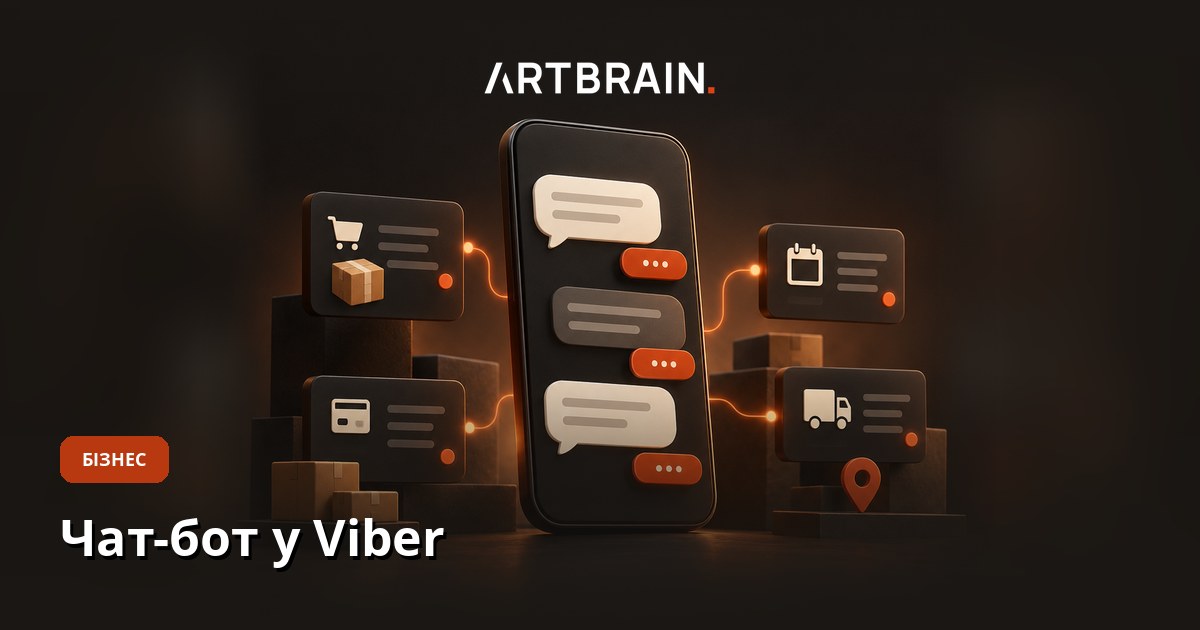
A Viber chatbot for business is a private conversation where software answers customers, collects enquiries or helps them complete a task. You can build a catalogue, appointment booking, order lookup or answers based on company documents. A new bot requires Viber approval and commercial terms. Development and platform use are separate costs, so start with the outcome you need and the budget for keeping it running.
The useful question is what happens after the conversation. Does an enquiry reach the right employee? Does a booking appear in the shared schedule? Does a buyer receive a checked order status? That outcome determines what to build. A polished menu has limited value if staff still copy every message into another system or customers have to call to find out whether their request was saved.
What can a Viber bot do for a business?
A bot can provide a convenient way into your service. Customers choose what they need, clarify the conditions, submit an enquiry and receive a result in their messenger. The working process has to be built behind that conversation. Viber supplies the communication channel; it does not organise your orders, keep prices current or maintain a shared staff calendar for you.
For a shop, we can build product selection and order handoff. A service company could collect a problem description and assign an employee. An appointment business could offer available times. These are possible development scenarios, rather than our published Viber case studies. Start with one process your team handles manually and whose completion you can verify.
Consider a customer asking about delivery. A useful response retrieves the status from the order system and explains the next step. When that system is unavailable, the bot should explain that it cannot check right now and offer help from a person. A stock answer saying the parcel is on its way would create another support problem.
Chatbot, Business Messages or channel?
A chatbot supports an individual flow: question, selection, clarification and result. Viber Business Messages is a separate business communication product, including messaging an existing phone database with the appropriate permissions. A channel carries administrators' posts. Comments on a post do not provide the same personal order process.
Consider a channel for shared announcements. Check Business Messages when the task is notifying customers from an existing database. A bot suits enquiries, self-service and exchanging information with your business software. These products can work alongside each other, but their onboarding and charges belong on separate lines in a budget.
“Send something to all our Viber customers” is not yet a bot specification. First establish where the contacts came from, what recipients agreed to receive and what you plan to send. A phone number in your records does not make its owner a subscriber to your bot.
How do you create and approve a new bot?
Since the change on 5 February 2024, new Viber bots operate on commercial terms. Apply through an official partner or directly to Viber. Approval comes before the commercial agreement. Verification and visibility in search remain platform decisions; a developer cannot guarantee them simply by delivering working software.
The practical sequence is to describe the business and the bot's purpose, agree on onboarding and charges, complete the review and connect the software. An API is a way for software to exchange information with another service. As an owner, you mainly need a named person responsible for the agreement and a clear route for invoices.
Software development can run alongside the organisational work, but a public launch date should depend on confirmed onboarding. Keep development time and external approval time separate in the plan. Otherwise you may print customer invitations or book a campaign before the bot is available, based on a date the developer cannot control.
What does a Viber bot cost each month?
Checked on 20 October 2026, Viber's main commercial model page and rate card show €115 per bot per calendar month, unless otherwise agreed in writing. Its official FAQ still mentions €100. Budget from the current rate card and the written offer for your agreement, rather than relying on an older tutorial.
The bot owner pays the monthly fee and charges for delivered messages initiated outside an active session. Session messages are included in the monthly fee. A subscriber's message opens a 24-hour session; replying to a bot-initiated message also opens one. A single welcome message before subscription is not billed.
References to 10,000 free outgoing messages describe the previous model. Do not assume that allowance for a new bot. Hosting, onboarding services, support, payment processing and any language model usage are separate budget items.
Ask for two parts in the estimate: development and recurring expenses. Include an expected volume of chargeable outgoing messages. A reminder about tomorrow's appointment may have a different cost from answering someone who has just contacted you. This distinction helps you judge operating costs after launch instead of comparing development quotes alone.
Who can a bot message?
Regular bot messages go to subscribers using their Viber identifiers, rather than arbitrary phone numbers. Bulk sending does not remove that restriction. Importing a spreadsheet of numbers cannot turn those contacts into bot subscribers.
Specify the purpose, audience, permission to receive messages and way to opt out before commissioning a campaign. Separate service updates from advertising. Respect unsubscribe requests, and require a restarted campaign to skip messages already processed. These are requirements for the proposed implementation and should be checked before using a real customer list.
Define success carefully. An accepted send request does not prove delivery, and delivery does not prove a sale. Ask for a report showing the intended audience, deliveries, errors and items needing attention. Agree on a budget cap and a way to stop sending when the outcome differs from the plan.
Viber or Telegram for a Ukrainian business?
Look at your own customers first. Where do they contact you now, and will they open a conversation and return to it? General popularity figures do not describe the audience of a particular shop. Review enquiries over a comparable period and ask regular customers which channel they prefer. The owner's favourite app is not enough evidence.
Telegram's ordinary bot messaging is free within technical limits, with paid faster broadcasts available separately. Telegram also offers Mini Apps, which are web interfaces inside the messenger. A new Viber bot brings commercial onboarding and the session and outgoing message charging model into the initial decision.
If customers already use Viber to work with you, lower platform costs elsewhere do not guarantee a better result. For a complex storefront, assess the interface you actually need. Our guide to Telegram bot development for business explores that platform separately. You can validate one channel before funding a second.
When is a builder enough?
A builder lets you assemble a conversation from ready-made blocks. It is worth checking for menus, common questions and a simple enquiry form. Ask for a demonstration of your full flow: correcting an answer, handing the enquiry to staff and stopping messages. An “integrations available” label does not establish compatibility with your actual software and required fields.
Check the specific service plan: Viber availability, separate charges, data export and responsibility for failures. A custom build is not necessary for every variation in a process. If an existing service passes your checks and its running costs are acceptable, it may be sufficient. Compare completed work rather than the length of a feature list.
When does custom development make sense?
CRM and orders
A CRM is a system for customer records and enquiries. A custom connection makes sense when the bot must create the right record, assign an employee or retrieve a verified status. First check that the system's API permits those operations. “Request received” should appear after the record is saved. Pressing confirmation again should not create a duplicate.
Catalogue, payments and booking
A catalogue needs a source of current prices and availability. A payment flow can use a payment provider's page and return the confirmed outcome to the order. Clicking a button is not proof of payment. Booking needs a shared schedule check: if a slot has gone, offer another rather than promising an appointment the business cannot fulfil.
Answers from company documents
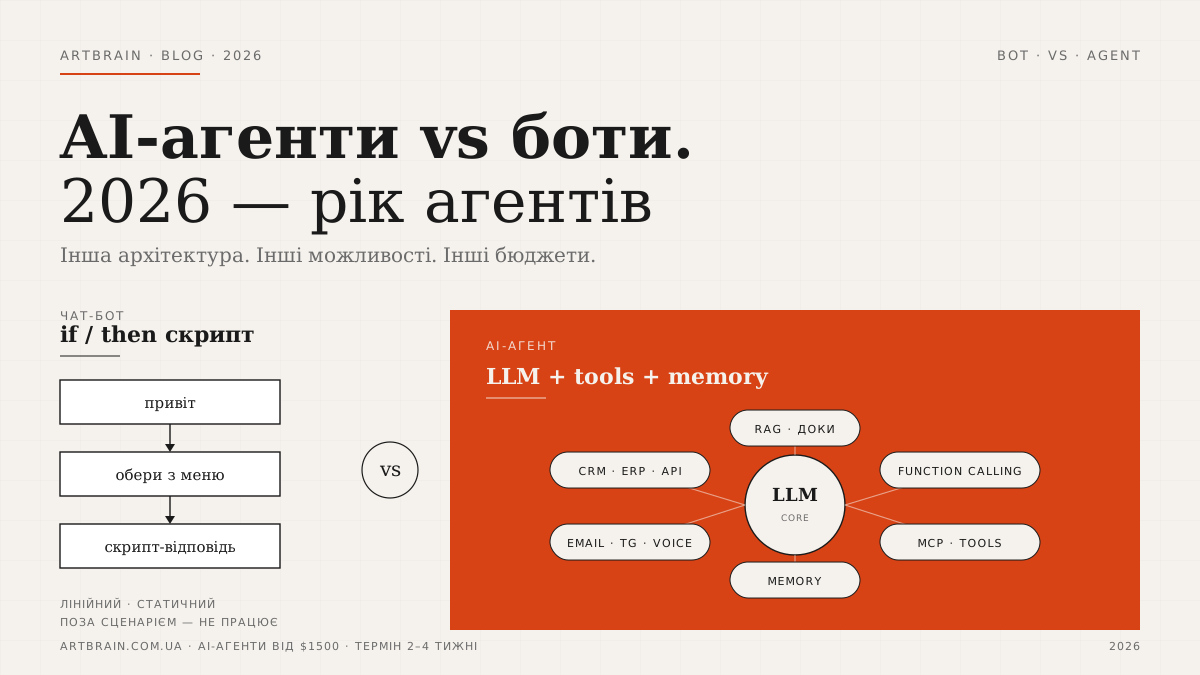
We can add artificial intelligence that finds answers in approved company materials. It needs current documents and boundaries: allowed topics, handover to staff and someone responsible for updates. Retrieve prices and statuses from business records. Our comparison of AI agents and chatbots explains the difference between answering a question and taking an action.
What can Artbrain build, and on what terms?
Our chatbot development service describes a bot for one selected messenger, menus and commands, automatic replies, enquiry handoff, an admin panel, hosting setup and 30 days of support. Hosting is paid separately, directly to the provider. Typical software development takes 1-3 weeks, with the exact scope and schedule agreed after the brief.
Request a project estimate for your requirements. You own the code and data. Catalogue, booking, payment and other additions need their own agreed scope; the Viber licence is a separate operating expense. External approval time should not be treated as part of the programming schedule. A complete bot with several integrations will not automatically fit the base scope.
We do not currently present a published Viber bot case in our portfolio. We can build one for an agreed process. If the main requirement is answering questions from your materials, also review our AI assistant development service. The required communication channel and knowledge sources should be discussed before estimation.
What should the owner prepare?
- One process and its final outcome: a saved enquiry, confirmed booking or checked status.
- Customer questions without personal information, approved answers and proposed menu text.
- The business system, catalogue source, calendar and directions in which data must travel.
- A responsible employee, working hours and a process for unfinished enquiries.
- A business name, logo, description and expected outgoing message volume for onboarding discussions.
No passwords are needed in your first message. A description, examples and system names are enough to begin. The domain and hosting stay in your account. Agree on the recurring budget and who receives invoices or error alerts. After launch, someone needs to own these tasks so a working customer flow does not quietly stop.
How do you measure the value of a bot?
Compare costs with specific work the team performs. Before launch, record where staff copy enquiries manually, which questions repeat and where customers abandon the process. Review the same actions afterwards. More messages can mean a confusing menu, so message volume alone is a poor measure of value.
Include the work after handover to a person. If the bot collects details and the employee asks for them again, work is duplicated. Agree who owns conversations outside the menu, and collect only the information the task requires. Looking up a private order also needs an agreed way to establish that the customer is its owner.
How do you accept the bot and keep it useful?
Check the result where staff continue the work. Follow a new customer's journey, go back and change information, then press confirmation twice. Find the final record and compare its contents. Also check refusal, an unavailable data source and a request for a manager outside working hours. The customer should understand what happens next.
After handover, a tariff can change, hosting payment can lapse or a CRM can stop responding. Agree who monitors this, where unfinished operations appear and how processing resumes without duplicate enquiries. Start with a short description of your process. That provides enough information to choose a channel, define checks and scope the first release.
FAQ
How do I create a Viber chatbot for business?
Apply to Viber directly or through an official partner, complete approval and agree commercial terms. The software is developed for the required process. Plan development time and platform approval separately.
Can I create a Viber bot for free?
New bots operate on commercial terms. Checked on 20 October 2026, the main pricing page states €115 per month unless agreed otherwise in writing, while the FAQ still mentions €100. Delivered outgoing messages outside a session cost extra. Do not budget on the previous free allowance.
Can a Viber bot send broadcasts to phone numbers?
An ordinary bot addresses subscribers by their Viber identifiers. A phone list does not become its audience. For an existing customer database, consider the separate Business Messages product and check recipient permissions and its terms.
Can a Viber bot connect to a CRM, payments and AI?
We can build these flows after checking the required connections. CRM operations must be available, payments need a confirmed provider result, and document-based answers need current materials and handover to staff. The scope is agreed separately.
How much does Artbrain charge for a Viber chatbot?
Request an estimate based on the process and integrations you need. Typical software development takes 1-3 weeks, with the exact scope and schedule agreed after the brief. Viber fees and hosting are separate; platform approval time is separate from programming time.