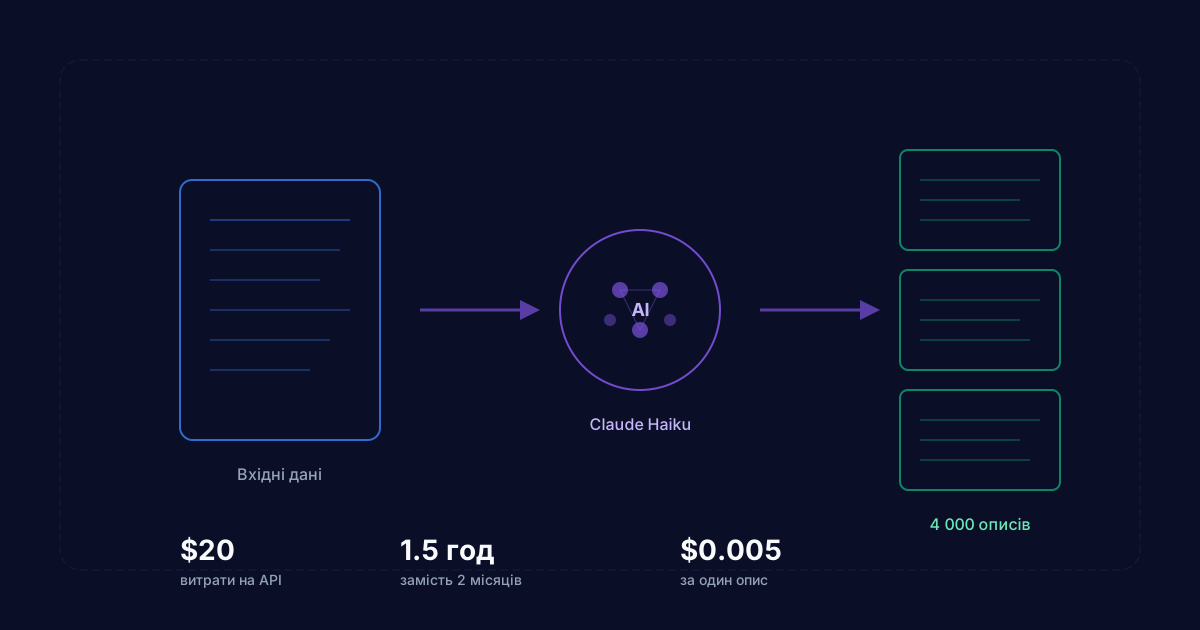
- AI proposes facts and drafts; sources support specifications and a person approves the page.
- Price and availability updates need separate rules, and stock accuracy depends on supplier data.
- Start with a sample file and difficult records, then measure the cost of an accepted product page.
An AI product catalog pipeline can start before anyone writes a description. It can help interpret supplier price lists and find missing product information on websites you specify. The useful outcome is a product page with supported facts, reviewed by a person and ready to publish. Fluent copy about the wrong product is still a failed result.
The process runs from a supplier file to an identified product, collected evidence, a draft, human approval and publication. Price and availability updates follow their own rules. Artbrain can build this workflow around your store. The source list, approval steps and ongoing model costs need to be agreed before work begins.
Where AI belongs in a supplier-to-catalog workflow
Start by watching what a catalog manager actually does. Copying values from consistent columns calls for a regular importer. Working out an unfamiliar spreadsheet layout or finding a specification for an exact model may benefit from AI assistance. These are different jobs, with different costs and acceptance criteria. They should be scoped separately.
Known rules can handle a price update or an agreed unit conversion. A model can propose a match where a heading or phrase is ambiguous. That proposal still needs support from the file, a product source or a manager's decision. There is little value in asking a paid model to reconsider unchanged rows every time a file arrives.
Our guide to automated product processing and imports covers file formats, categories and duplicate handling. Here the focus is on the decisions between stages: what evidence allows a field to be populated, who approves it, and what happens when the evidence is missing. Those decisions make the workflow usable beyond its first successful run.
Read a new supplier sheet without trusting it blindly
For an unfamiliar price list, we can implement AI-assisted suggestions for reading rules. The system inspects the structure and proposes which columns contain the item code, name, price and availability. Approved rules can be reused. A difficult layout may still require a developer to configure it. Reading every possible document without intervention is not a sensible promise.
The review should show the original row beside the proposed catalog fields. Check the currency, selling unit and meaning of the price. A carton price must not silently become a price per item. A section heading must not become a product. An unclear row should be held with a reason rather than completed by guessing.
Include the next file from the same supplier in acceptance. A renamed column or an extra introductory row should trigger a check if it breaks the approved rules. Agree that an unrecognised layout stops that update while the store retains the last accepted data. Uploading a file successfully proves very little about whether its contents were interpreted correctly.
Identify the exact product before collecting facts
Useful matching starts with the brand, manufacturer part number and version. A supplier's internal code may identify an item only within that supplier's own catalog. Similar names do not establish that two pages describe the same offer. Pack contents and product variants deserve particular attention, even when their photographs look almost identical.
Consider a fictional desk lamp listed as “L-24”. A search finds “L-24 USB”, while a manual describes the whole family. The workflow must confirm the version before importing a power specification. This is an illustrative example, not a customer case. If the version cannot be established, the correct output is a question for the manager and an unresolved field.
Decide which differences mean another product and which belong as variants on one page. The matching result should show evidence or explain why no match was accepted. A confidence score cannot replace a matching part number and a relevant source. Otherwise a reviewer may spend time improving a convincing description of the wrong item.
Use an agreed source list and keep the evidence
We can implement searches for missing facts on websites you name, with extraction from product pages and documents. Begin with an approved list: a manufacturer's catalog, supplier pages and manuals for the relevant products. An unrestricted search makes review harder because the easiest page to find may describe a different version or bundle.
For a significant specification, keep the value, unit, source address, retrieval date and supporting quotation. A manager can then inspect where a housing material or package component came from. A quotation makes the claim traceable. It does not establish that the system selected the correct table column or that the original document is free of mistakes.
Conflicting sources need a visible decision. A manufacturer may describe the standard construction, while a supplier sells a particular bundle. Agree priorities by field rather than treating the longest document as the winner. Also confirm which text and images are available for reuse. Finding a publicly accessible page is not a reason to copy its entire content into your store.
Turn accepted facts into a useful product draft
Once facts are checked, we can implement an extended draft containing specifications, a description, benefits and buyer questions with answers. Benefits should follow from established features. A removable part might make cleaning easier, provided it really is removable. Certification, safety claims and promises about service life should never be added just because they sound persuasive.
Useful questions address a buying decision: what is included, how to select a version, or whether an accessory is required. If the sources do not answer a question, leave it for the manager. An invented compatibility answer can lead to the wrong order. General praise about quality does not fill the information gap.
Our separate article on AI product descriptions and store content discusses batch writing and the input it needs. The concern here is the connection between each meaningful statement and an accepted fact. Rewording a sentence can improve readability, but it cannot make an unsupported claim reliable. Agree which fields must remain blank until evidence is available.
Review translations and images as product information
Translate the accepted draft. Model names, numbers, units and pack contents must agree across languages. A correction to a specification should create a clear follow-up for its translations. Otherwise one shopper reads the corrected fact while another sees an old promise about the same product. The review process should make outdated language versions visible.
For photographs, distinguish file optimisation from changing the picture itself. Compressing an image for faster loading is a different operation from redrawing product details. We can implement image improvement while retaining the original. Before replacement, a person compares shape, colour, labels and small components against the source photograph. A cleaner background does not justify an altered product.
Reject a result that removes an important marking or adds a component that does not exist. When physical details affect the buying decision, a modest authentic photograph is more useful than a polished inaccurate one. Review image descriptions too: they must not introduce properties absent from the photo and supporting documents. Keep originals available for later checks.
Make human approval a decision, not a vague instruction
A reviewer needs to accept the draft, return it for changes or request clarification. Put the sources next to the proposed fields and show differences from the previous version. If the manager must research every number again, the workflow has simply moved the manual work. Review effort belongs in the cost calculation from the beginning.
- Match the exact model, variant and bundle to the supplier record and evidence.
- Check facts that affect the purchase, especially numbers and units.
- Remove unsupported promises from descriptions, benefits and answers.
- Compare photographs with originals and review translations of changed fields.
- Open the published page, find the product using its relevant filter and inspect the selected variant.
Include the page title and short search description, often called SEO fields. Google's guidance calls for accuracy checks on automatically generated content, including metadata. Producing many pages without adding value for visitors may breach search policies. Using AI does not establish a basis for promising higher rankings or increased sales. Acceptance should focus on useful, accurate product information.
Keep updates separate from approved descriptions
Publication is the beginning of ongoing catalog work. Prices and availability should follow agreed update rules without silently overwriting approved copy. A new supplier file should not erase a manager's edits or trigger paid drafting for every unchanged item. Assign ownership of each field to a source, a person or a defined rule before implementing updates.
A successful refresh cannot guarantee stock accuracy. The supplier may provide an old file or may not yet have recorded a sale. An empty value is not confirmation of availability. Agree how uncertain stock is represented and how the manager learns that a source has not refreshed recently. Order handling should reflect any need to confirm availability.
Test failure while the workflow is still being evaluated. A source stops responding, a file changes shape, or the model request fails. The manager needs to see what completed, what remains pending and why. After recovery, a repeat run should continue without duplicate products and preserve the accepted page. Decide who owns these exceptions after handover.
What our published work demonstrates
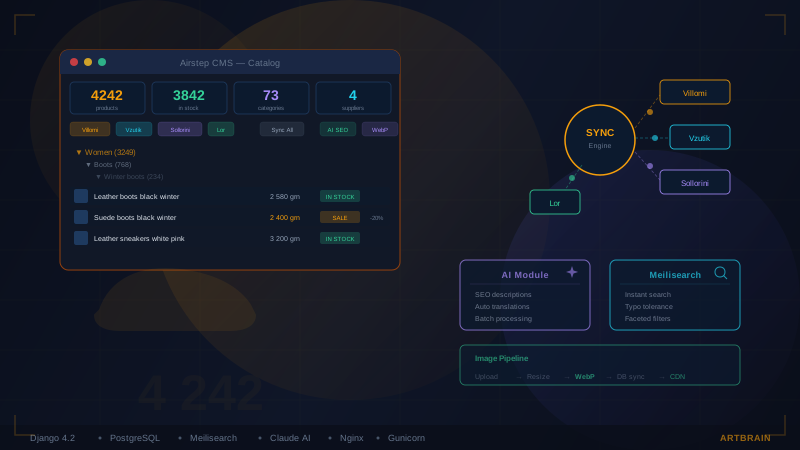
The published Airstep case describes automatic catalog imports from several suppliers' XML feeds, including price and stock synchronisation. XML is a structured format for exchanging data. The project materials also describe batch generation of descriptions and SEO fields, automatic translation with change history and rollback, and image optimisation. These are specific mechanisms demonstrated in public material.
Source discovery on named websites, quotations supporting specifications, comparison of an existing page with its sources and image improvement are capabilities we can implement for a particular store. Their scope needs to be established using your data. Not every catalog requires the whole sequence, and some sources will not yield all the information in a form that can be checked.
When a smaller improvement is enough
A small catalog that rarely changes may not justify the complete workflow. If a manufacturer already provides checked specifications and approved photographs, start by importing those. If complete pages only need translations, scope that job. The number of available features does not tell you how much work they will remove.
Sometimes staff repeatedly open the same documents because evidence is never saved beside the fields. Retaining that evidence may be the best first improvement. Establish the facts before adding automated writing. This separates a data problem from a writing problem and avoids paying to correct the same fact repeatedly.
Record the field, reason, source and decision for each rejected trial result. Unconfirmed pack contents call for a supplier answer; a value from the wrong column calls for a processing fix. Repeating generation without diagnosing the cause only adds cost. These records reveal which improvement will help the reviewer next.
Check the shopper's experience too. A technically complete page can still hide the difference between variants in a long paragraph. Put decision-making facts in specifications and variant names. Expand based on accepted pages and reduced rework, rather than sales gains that have not been measured.
What it costs to start
Store development, description generation and a source-backed catalog workflow are different scopes. A price for a basic store or a description feature does not cover every step from an unfamiliar supplier sheet to a reviewed page. The initial estimate needs to identify the files, source sites, required fields, review process and connection to your existing store.
Separate implementation from operating costs. Paid model usage, document processing, repeat attempts and the manager's review time all contribute to the cost of an accepted product page. Long sources and additional languages change that workload. A universal per-product figure would hide important differences between an easy complete record and a difficult record with conflicting evidence.
Ask for a bounded proposal: which sources are included, what counts as an accepted page, what happens on failure and who maintains the rules when a supplier changes a file. A first trial should reveal the full cost of reaching an accepted result. Its commercial terms and later support must be agreed; do not assume the trial is free.
Prepare a useful trial and decide whether to expand
Bring a current supplier file, your store address, an example of the page you want and the sites permitted as sources. Mark mandatory specifications and fields that staff edit manually. Passwords are unnecessary for the first discussion. A normal product and a difficult exception tell us more than a long wish list of features.
Include a complete record, a missing specification, similar models, conflicting sources and an unavailable page. Inspect the draft, the published product and the next supplier update. Supported information should reach the shopper, disputed information should remain under review, and manual changes should survive. Repeat an interrupted run and check that another product has not appeared.
Measure the full cycle before and after the change, accepted pages, rejection reasons and ongoing costs. Use those observations to decide whether to add further suppliers. If review remains the bottleneck, improve the evidence display or reduce the required field set first. More generated text does not necessarily mean less work for the team.
Artbrain can connect catalog preparation, review and updates through online store development and automation. If you need a separate helper for documents or answers based on accepted data, explore AI assistant development. Start with the practical gap: what the supplier sends today and what a shopper needs to see on the finished page.
FAQ
What does an AI product catalog pipeline do?
It can help interpret supplier price lists, find missing facts on approved websites and assemble product drafts. Artbrain can implement this workflow around your catalog. Specifications need supporting evidence, and a person reviews the page before publication.
Can AI build a product page from just a name and price?
We can implement source discovery, but the exact model and permitted sources must be established first. An ambiguous name or several similar versions require clarification. Missing specifications should remain unresolved rather than be invented.
Can product pages be published without human review?
The proposed workflow includes human approval before publication. A reviewer checks the exact model, pack contents, important specifications, images and translations. Supporting quotations make facts easier to inspect, but cannot guarantee correct interpretation.
Do automatic supplier updates guarantee accurate stock?
No. Accuracy depends on the supplier data and how recently it was updated. An empty value is not confirmation of availability. Agree what happens when a file is stale, a source is unavailable or stock needs confirmation.
How much does a supplier-to-catalog workflow cost?
Implementation depends on the files, source sites, required fields and approval process. Basic store development and description generation are separate scopes from a complete source-backed workflow. Allow for paid model usage, repeat attempts and review time, then measure the cost of an accepted page during an agreed trial.