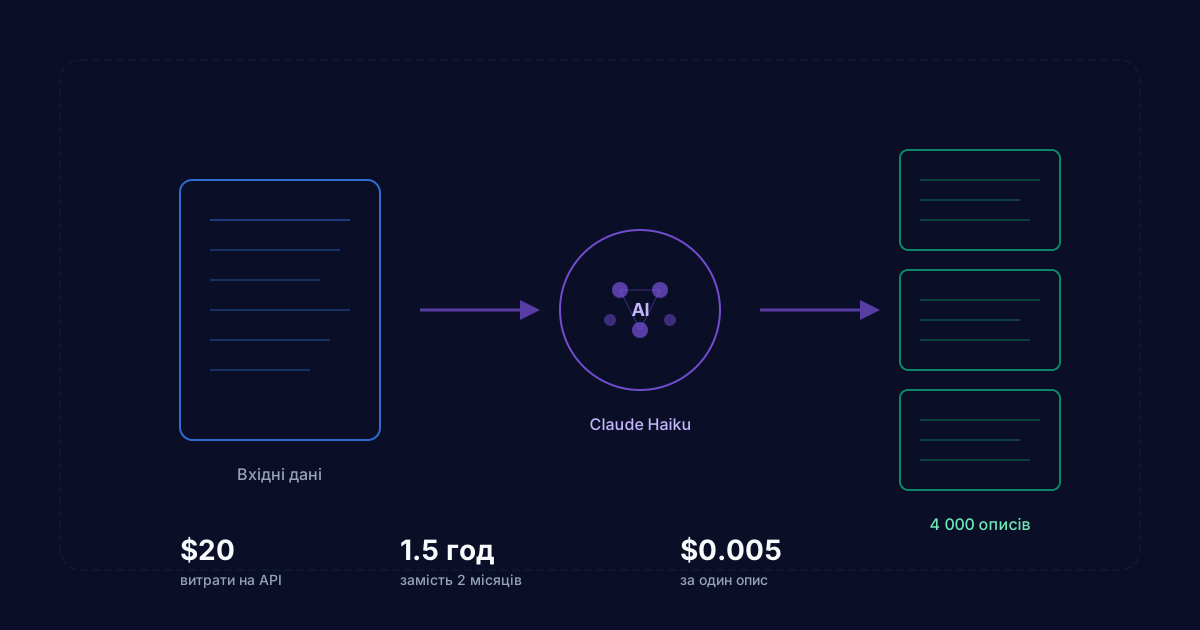
Imagine: you have an online store with 4,000 products, and none have proper descriptions. A copywriter writes 20–30 descriptions per day at $0.15–0.20 each. That is ~$600–800 and 133–200 working days. We did the same for $20 in 1.5 hours, using Claude Haiku, an AI model by Anthropic. This is not theory: it is a real case from the Airstep online store, which we built and manage. Here is an honest look at the process, quality, limitations, and what else AI can automate for your business.
The Problem: 4,000 Products Without Descriptions
After migrating the Airstep shoe store from MODX to a new platform, we imported the catalog — 4,000+ products. Each had a name, price, sizes, and photos. But descriptions? Either missing or one-two sentences copied from the supplier, identical across dozens of products.
For SEO, this is critical. Google values unique content on product pages. A store without descriptions is thousands of thin content pages that search engines do not want to show. Moreover, a good description increases conversion — a person reads it, understands the benefits, clicks "buy."
What Options Did We Have?
A copywriter can produce 20–30 descriptions a day, so 4,000 would take approximately 133–200 working days. The cost is $600–800, and the result is unpredictable: the first hundred descriptions may be fine, then fatigue sets in and the writing becomes formulaic. Freelance marketplaces cost less, but the quality is poor and the text is often rewritten from competitors. AI cost $20 and gave us controlled quality. We chose the third option.
When the catalogue runs into thousands, manual descriptions do not scale
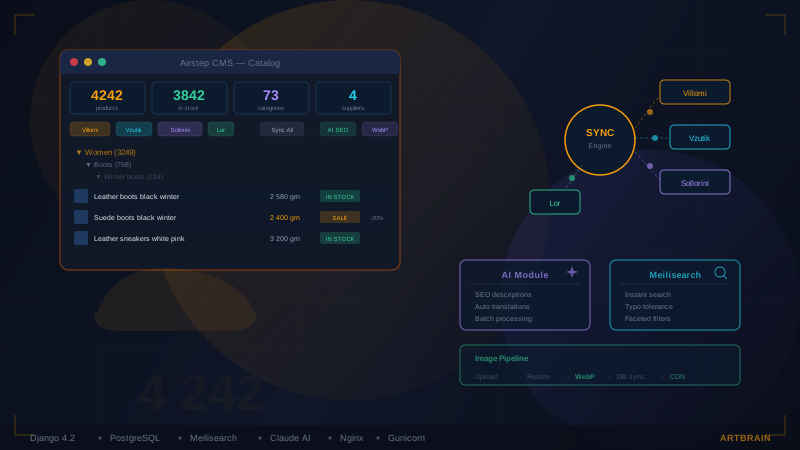
Development of a store with a large catalogue starts at $2500. The Airstep store has 6,700+ products and automatically imports its catalogue from XML feeds supplied by four suppliers.
Estimate my storeThe Solution: Claude Haiku + Structured Input Data
For generating product descriptions, you do not need the smartest model — you need a fast, cheap one that follows instructions well.
Why Quality Depends on Input Data
The key rule: AI uses the data you provide, but can invent details. We check output quality before launch. If you send only “black women's shoes”, you get generic text. If you provide structured attributes — you get a meaningful description.
For each product, we provided: name, category, material, color, sizes, season, and price. We also specified clear requirements: SEO optimization, selling style, 80–150 words, natural Ukrainian language, no fabricated details.
The Prompt Makes All the Difference
We stated exactly what we needed: keywords (category + material + season) had to appear naturally, the style had to sell rather than read like a catalogue, the length had to be 80–150 words, the Ukrainian had to sound natural, and above all, the model could not invent anything absent from the input data.
Results: Numbers and Examples
| Metric | AI (Claude Haiku) | Copywriter |
|---|---|---|
| Descriptions | 4,000 | 4,000 |
| Time | ~1.5 hours | ~133–200 working days |
| Cost | $20 | $600–800 |
| Per description | $0.005 | $0.15–0.20 |
| Consistency | 100% — single style | Varies with mood |
Quality: An Honest Assessment
AI descriptions are not perfect without good input data. But with structured attributes, quality matches a mid-level copywriter, while consistency is higher. For 90% of products — fully ready descriptions. For the top 10% (flagships, new arrivals) — worth a manual polish.
What Else AI Can Automate on Your Website
Product descriptions are just the beginning:
SEO Meta Tags
Title and description for every page. Not a template such as “Buy [name] in Ukraine,” but proper text with keywords and a price. Creating these by hand for 5,000 products takes weeks. AI does it in hours.
Catalogue Translation
Need Ukrainian, English, and Polish? Claude handles Ukrainian much better than Google Translate. It is not perfect, but it is more than sufficient for a catalogue.
Category Descriptions
“Women’s loafers” and “winter boots” are usually pages without text. Useful copy can complement a category, but text alone does not guarantee rankings. AI can write SEO copy for every category in minutes.
Alt Tags for Images
For SEO and accessibility, every image needs a descriptive alt tag. Doing this by hand is tedious and slow. AI generates them automatically from product attributes.
AI Chatbot
A Telegram bot or website widget trained on your catalogue. “Do you have these sneakers in size 42?” The bot answers instantly, and managers are not interrupted.
Review Analysis
AI analyzes customer reviews and produces a report by topic: delivery, sizing, quality, and service. Instead of reading hundreds of comments manually, you get the substance.
Product Recommendations
It analyzes what a person viewed and bought, suggests relevant products, and helps increase the average order value without manual selection.
How Much Does AI Automation Cost
| Task | API Cost | Development | Result |
|---|---|---|---|
| 5,000 product descriptions | $20–30 | from $500 | Unique content in 2 hours |
| SEO meta tags (5K pages) | $10–15 | from $300 | Unique title/description |
| Translation to 1 language | $30–50 | from $400 | Full catalog translation |
| AI chatbot (Telegram) | $5–15/mo | from $1,500 | Replies outside working hours |
| Review analysis | $5–10/mo | from $800 | Automated sentiment reports |
| Product recommendations | $10–20/mo | from $2,000 | Relevant products in the catalog |
Development cost is a one-time investment in integrating AI with your site. API charges for descriptions and translations depend on the volume processed. Continuously running features require an ongoing budget.
How to Get Started
At Artbrain, we have been implementing AI solutions for businesses since 2024. The process: audit your site, test on 50–100 products, scale after approval, integrate with your CMS for automatic descriptions of new products.
Learn more about our AI solutions for business or get a free consultation. Also read: How AI Assistants Cut Business Costs.
FAQ
How much does AI content automation for an online store cost?
The price depends on scope, integrations and timeline. We prepare an exact estimate after a free review of your task.
Which AI models do you use for content generation?
We typically use GPT-4 or Claude for text and a separate image model when product photos need processing. The choice depends on language quality, content volume and monthly API budget. We test 2 or 3 models on your real data before settling on one.
Will the AI write content in our brand voice?
Yes. We feed the model your existing best descriptions, brand guidelines and tone-of-voice notes. The first 30 to 50 generated items go through your team for review, the model is corrected on that feedback, and only then we let it run automatically. Spot checks are still recommended monthly.
Can the AI update product cards automatically when prices or stock change?
Yes, the pipeline can be triggered on stock updates, new SKUs or seasonal changes. The AI regenerates the relevant parts of the product card and pushes them to the CMS. Manual review can be required for big-ticket items or sensitive categories.